10. sep. 2026
The interpretability module will be an important feature of the GASS technology because it will help decision-makers understand and trust if the ML models are accurately predicting actual figures observed. Trust will drive the adoption of the technology, as decision-makers will be more inclined to follow the advice given.
Contractual details
The contractual details state that the Interpretability module was to be worked on during months 12 to 30 of the project. Led by NAVTOR, with contributing partners being Simula Reseach Laboratory, Grieg Star, Sin Oceanic and Sustainable Energy.
A detailed analysis of the system output breaking down the impact of various parameters impacting a voyage on the ML predictions of voyage and vessel performance will be developed.
This module will be essential for building the trust of end users in the GASS system’s ML-based predictions.
Deliverable Content
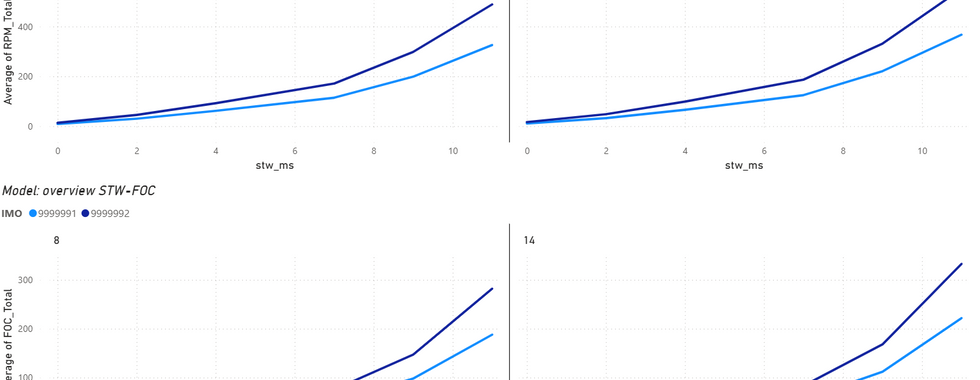
Plots comparable to sea-trial documentation have been generated for a subset of the ML-based vessel models. These plots show speed vs. power across multiple draughts.
This provides a solid starting point for an interpretability module. The first version was a version with static plots.
This was implemented in a prototype software tool >> PowerBI.
The deliverable content is a tool that lets you select one or more vessel models and then provides two types of insights into vessel model behaviour with respect to operational and weather variables, applicable to all ships.

“We can use this tool to assess whether a vessel model is suitable for weather routing, and thereby determine its potential to reduce fuel consumption and improve safety,” says Arnbjørn Maressa, Product Manager, NAVTOR




Next Steps
It is to be used for further development. It can still be improved and advanced when we have more ship models.